Q&A on VSEPR

Q: Why is knowing the shape of a molecule important? from Ann

A: It is very important for chemists to predict the type of shape a molecule forms because they can find other information from the geometry. As we began to learn last day, we are able to determine the polarity of a molecule by looking at the dipole movement and the shape. With this knowledge we can then figure out the properties of the molecule. The geometry of molecules is also helpful to biologists, who use them to understand the shapes of more complex molecules, namely proteins and DNA.

Q: Are there only 7 different shapes a molecule can be? from Chad

A: There are many more including octahedral, square pyramidal, square antiprismatic, etc. These occur when there are more bonding pairs and atoms. However, this year we will mainly be sticking to the 7 that we learned in class.

Q: Does the VSEPR theory work on every molecule? from Andrew

A: Good question, Andrew. The theory works on most molecules, however, there are some exceptions. Sometimes they are bent instead of linear because the polarization of a metal atom causes the inner shell to not be spherical and affects the geometry. Other times a molecule can be linear instead of bent because the central atom is is more electronegative and the lone pairs are weakly repulsive. However, we will not expand very much on this in grade 11 chemistry because it is beyond the scope of the course.

Types of Shapes

Linear

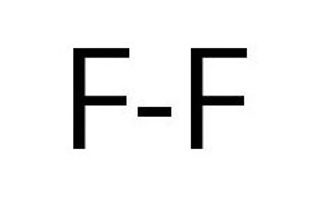
A linear shape is formed when there is no central atom OR when there are 2 electron pairs on the central atom and no lone pairs.


Trigonal Planar

A trigonal planar is formed when there are 3 electron pairs on the central atom and it has no lone pairs.


BF3 has 3 electron pairs around the central atom and no lone pairs. Therefore the atoms would spread out equally around the central atom, creating a trigonal planar.


Tetrahedral

 A tetrahedral is formed when there are 4 electron pairs on the central atom and it has no lone pairs.


Trigonal Pyramidal

 A trigonal pyramidal is formed when there are 4 pairs of electron pairs and 1 of those pairs is a lone pair.


Linear Bent

 A linear bent shape is formed when there are 4 pairs of electron pairs and 2 of those pairs are non-bonding.

Rules of VSEPR

1. If there are more than 2 elements, place the electron with the highest bonding capacity in the centre. 

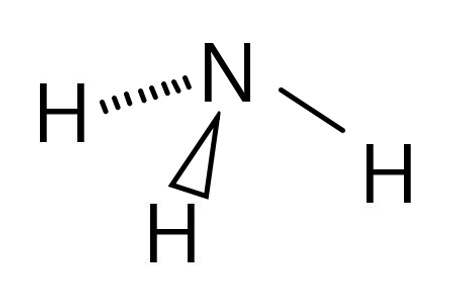
 e.g. NH3 is created by using single bonds to make up the molecule.

3. Continue to form double and triple bonds until atom has reached a noble gas configuration.

e.g. Nitrogen has reached an octet and hydrogen only holds 2 electrons so there is no need to add double/triple bonds.

4. Determine molecular shape by considering the total number of electron pairs around central atom, and the number of lone pairs around central atom. 

 e.g. Nitrogen has 3 electron pairs with hydrogen and one lone pair. Therefore NH3 is a trigonal pyramidal (please look under the blogpost “Types of Shapes” for further explanation).

  5. Although lone pairs influence the shape of the molecule only the atoms themselves make up the geometry of the atom.

 e.g The lone pair repels the other electrons but are essentially “invisible” when drawing the diagram.

Introduction

       Valence shell electron pair repulsion theory is used to predict the geometry of  molecules by how many electron pairs and lone pairs are on the central atom. In order for valence electron pairs to be as far apart as possible, molecules adjust their shape.

        A lone pair can change the shape of the molecule because although it is not bonded to another atom, the electrons are still there and they still repel the other electrons, causing a irregular shape when predicting the molecular geometry.

       We can only use VSEPR to find the shapes of molecules, because ionic compounds form crystals with various lattice structures which is much more difficult to determine the shape. In this course, we will only look at the geometry of molecules.